Shirley Kuan: “Bea Never Defended Me” — The Full Story Behind Six Years, a Canceled Wedding, and a Quiet Exit

Shirley Kuan: “Bea Never Defended Me” — The Full Story Behind Six Years, a Canceled Wedding, and a Quiet Exit
For months, veteran talent manager Shirley Kuan held her tongue while gossip pinned her as the villain in Bea Alonzo’s wedding saga. Now she’s talking — and the silence she broke may cost more than she bargained for.
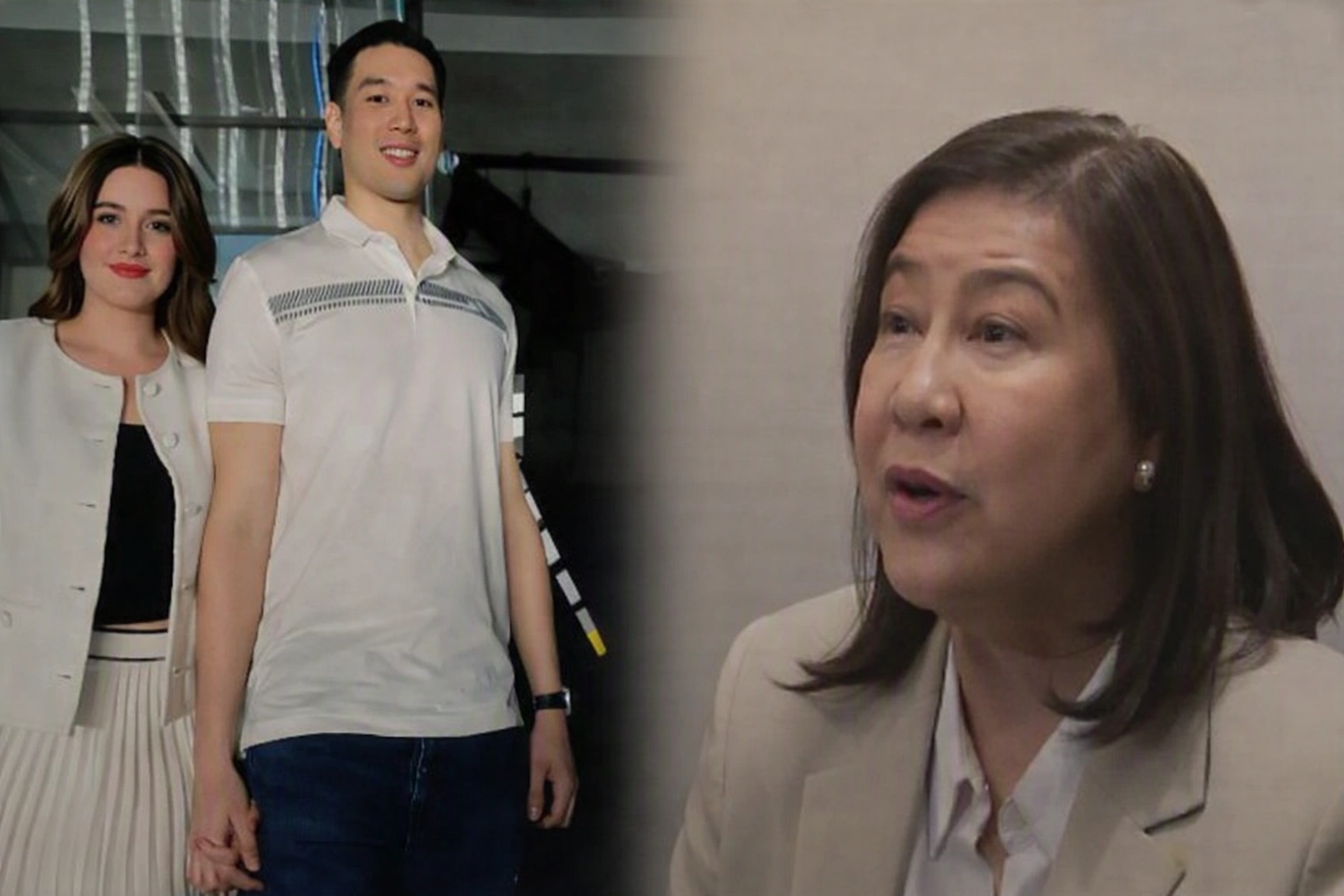
Shirley Kuan (right) managed Bea Alonzo’s career for six years before a quiet, painful exit.
There is a particular kind of silence that speaks louder than any press release. For almost four months, Shirley Kuan, one of the Philippine entertainment industry’s most experienced talent managers, wore that silence like armor — even as the internet slowly built a case against her. She was being called the reason Bea Alonzo’s dream wedding in Spain never happened. She did not fight back.
Then August came, and she finally did.
In an extraordinary tell-all session with select entertainment press — a sit-down that felt less like a publicity move and more like a woman reclaiming her own story — Shirley Kuan laid out, piece by painful piece, why she walked away from her six-year working relationship with one of Philippine cinema’s most beloved actresses, and why she could no longer afford to stay quiet.
📋 Quick Context
- Bea Alonzo and businessman Vincent Co were set to wed in Spain on May 14, 2026.
- Days before, the wedding became a public spectacle amid on-and-off reports and rumors of a prenup disagreement.
- Shirley Kuan was almost immediately named — in online chatter and Chinese community circles — as the person who caused the wedding to be called off.
- The couple quietly wed at Makati City Hall on July 13, with no guests and no fanfare.
- On August 11, Shirley informed Bea she was no longer her manager.
The Moment Shirley Got the Text
Shirley was in Los Angeles when everything unraveled. She had deliberately routed her flight through L.A. to avoid Dubai layovers — tensions in the Middle East at the time had made the route feel unsafe, and airfares through the region had spiked to alarming levels. She had appointments lined up with her doctors while there to make the trip worthwhile. She was invested in this wedding: she was a ninang, she had a gown made, she had already shelled out close to ₱700,000 in combined plane fare and hotel costs to attend.
Then, on May 8 — roughly six days before the scheduled ceremony — a text message arrived, not from Bea directly, but from Bea Secosana, who serves as Bea Alonzo’s business partner.
The message that followed — composed by Bea Alonzo herself, according to Shirley — was a formal cancellation notice. It spoke of sincere apologies for the sudden news, acknowledged that guests had made sacrifices to attend, and noted that Bea was currently on a flight but would reach out personally when she landed.
Shirley describes the stress of that moment with startling clarity: people were already at airports. Some had already boarded connecting flights to Madrid. There was no time to deliberate. Acting on instinct and out of consideration for the guests she knew personally, she decided to identify herself in the message she forwarded — precisely so recipients would know it wasn’t a prank. “SK,” after all, is a credible name in those circles. The message would land with weight if it came from her.
That single act of goodwill — attaching her name to a message she did not compose, about a decision that was not hers — would become the seed of months of public blame.
Read Also Bea Alonzo and Vincent Co’s Relationship Timeline: From Low-Key Romance to Secret City Hall WeddingThe Rumor That Wouldn’t Die
It was not a one-time news cycle. Weeks after the Spain wedding failed to materialize, the story had burrowed into a particular social ecosystem that is notoriously difficult to fact-check: the tight-knit Chinese-Filipino social circuit. Dinners, birthday parties, weekend gatherings — Shirley Kuan’s name kept surfacing as the culprit. People who counted themselves as friends of “the other camp” were confidently telling others that yes, it was SK who had meddled, SK who had caused the couple’s heartbreak.
What makes this especially sharp is the gap it reveals in how celebrity accountability works in the Philippines. Public figures are often protected from their own narratives — the people in their orbit absorb the friction so the star can remain untouchable. Shirley Kuan, for all her industry clout, was essentially undefended.
Shirley says she had friends inside those Chinese community circles who came back to her with reports. They told her they defended her. She’s grateful — but the math was always against her. “Kailangan ko bang mag-depend sa mga friends ko to defend me all the time? They cannot be in all the parties.”
This is the content gap that the narrative around this story rarely examines: why didn’t Bea Alonzo say anything? Not publicly — Shirley even acknowledges that Bea is famously media-shy when it comes to personal matters. But privately? To the people who were actively spreading the rumor in her own community? Shirley says Bea never did.
Related Bea Alonzo’s Love Life Through the Years: A Look at Her Most Public RelationshipsThe Promise That Trapped Her
When an article emerged naming Shirley as the meddling force behind the canceled wedding, Shirley’s instinct was to call Bea immediately. The conversation that followed is one of the more quietly devastating details in her account. Bea asked her not to say anything — she didn’t want it to escalate. And Shirley, who had managed this woman’s career for six years and who understood that Bea was heartbroken at the time, agreed.
The trouble is that a promise to stay silent in a crisis rarely has an end date. The narrative calcified: Shirley was the villain, and her silence was misread as either guilt or retreat. She had traded her reputation for Bea’s peace of mind — and found that peace never quite came for either of them.
🗳️ Reader Poll: Whose side do you find yourself on?
Thanks for voting! Here’s how others responded:
Three Triggers, One Breaking Point
Shirley is precise about what finally made her resign. She names three distinct moments — a timeline of accumulated slights that she tried, each time, to absorb.
The disinvitation is what breaks the dam emotionally, more than the rumors ever did. It wasn’t just humiliating — it was a direct negation of her work. She had built that deal from scratch. Being removed from its event was a message sent not through words but through exclusion, and it was a message she could not misread.

A Call to Arms — and the Text That Broke the Silence
If the disinvitation was the trigger, a phone call on August 21 was the accelerant. A fellow talent manager reached out to Shirley with a startling revelation: someone had approached her and asked if she could “start a fight” with Shirley Kuan. The fellow manager refused, telling the person that Shirley had done nothing to deserve any kind of attack. But the act of being recruited against — of someone actively commissioning conflict — was too much for Shirley to absorb quietly.
She immediately texted Bea. The message, paraphrased by Shirley in the press conference, was blunt: “Nag-resign na ako. Hindi pa ba kayo masaya? Ano pa bang gusto niyo?”
It is a loaded line — “isn’t that enough?” — and it suggests that Shirley, for all her measured public composure, had reached a genuine breaking point. The resignation wasn’t impulsive. But the press conference was, in a sense, the final act of self-preservation she felt she could no longer delay.
More Context Bea Alonzo, Marian Rivera, and Kathryn Bernardo: The Network War Nobody Wants to NameWhat This Story Reveals About the Industry
It would be easy to read the Shirley-Bea split as simply a personal falling out — two professionals whose relationship soured under extraordinary pressure. But there is a structural story here that rarely gets told cleanly in Philippine showbiz coverage.
Talent managers in this industry frequently operate as invisible load-bearers. They negotiate the deals, manage the client relationships, fix the crises — and when things go wrong publicly, they are among the first to absorb blame, because they exist at the boundary between the private world of the celebrity and the public’s appetite for narrative. They are close enough to be associated with scandal, but rarely visible enough to defend themselves without it looking like a betrayal of their artist.
Shirley’s case is an unusually clear illustration of what happens when that informal protection breaks down. She was not just blamed — she was, by her own account, actively prevented from defending herself by a promise she made in good faith. That promise did not come with a sunset clause. It did not include a mutual obligation for Bea to correct the record. And when the rumors continued long after the Makati wedding, Shirley found herself still bound by a vow that had ceased to serve any purpose except her own continued public damage.
The unspoken question — the content gap that hangs over this entire controversy — is whether Bea Alonzo was an active participant in the narrative that cast Shirley as the villain, or merely a passive beneficiary of it. Shirley herself does not answer this directly. She says she doesn’t know who was behind the campaign against her. She says Bea told her she didn’t know about the disinvitation from the event. She accepts these answers without confirming them.
But she also says, plainly, that Bea had the power to stop the rumors in the Chinese community — even just by speaking the truth privately — and chose not to.
Previously Vincent Co, Bea Alonzo, and the Wedding That Became a Story — What We Know
Where Things Stand Now
As of this writing, Bea Alonzo has not publicly responded to Shirley’s statements. She remains, as she has throughout this saga, largely silent — which is consistent with her public persona but does little to address the specifics Shirley has raised.
Shirley, for her part, says she has no plans to pursue any formal claim or public feud. Her goal in speaking was simpler: to correct a record that had been left uncorrected for too long. Whether Bea’s continued silence will be read as dignified restraint or an endorsement of the narrative that hurt Shirley is something only time — and the Philippine public — will decide.
What is already clear is that this story landed at an interesting moment in Philippine entertainment’s relationship with accountability. In an era when fan culture moves faster than truth, and when a talent manager’s name can become a villain’s name overnight through social media whispers, the mechanisms for protecting people who work behind the scenes remain almost nonexistent. Shirley’s press conference is one of the rare moments when someone in that invisible stratum of the industry says, with receipts in hand, that they matter too.
Six years is a long working relationship. It ends here — not with a dramatic confrontation, not with a legal filing, but with a phone call on an August afternoon and the words: “As of this very moment, I am no longer your manager.”
There is, in that quiet sentence, a kind of dignity. Whether it will be enough to repair her reputation in the circles where the damage was done is a different question entirely.