
Robin Padilla and the Court of Public Opinion:The Controversies That Made Him More Popular

Philippine Celebrity Politics & Culture
Robin Padilla and the Court of Public Opinion:
The Controversies That Made Him More Popular
How prison, religion, guns, and politics turned a “bad boy” actor into a senator — and why Filipinos loved him even more for it.
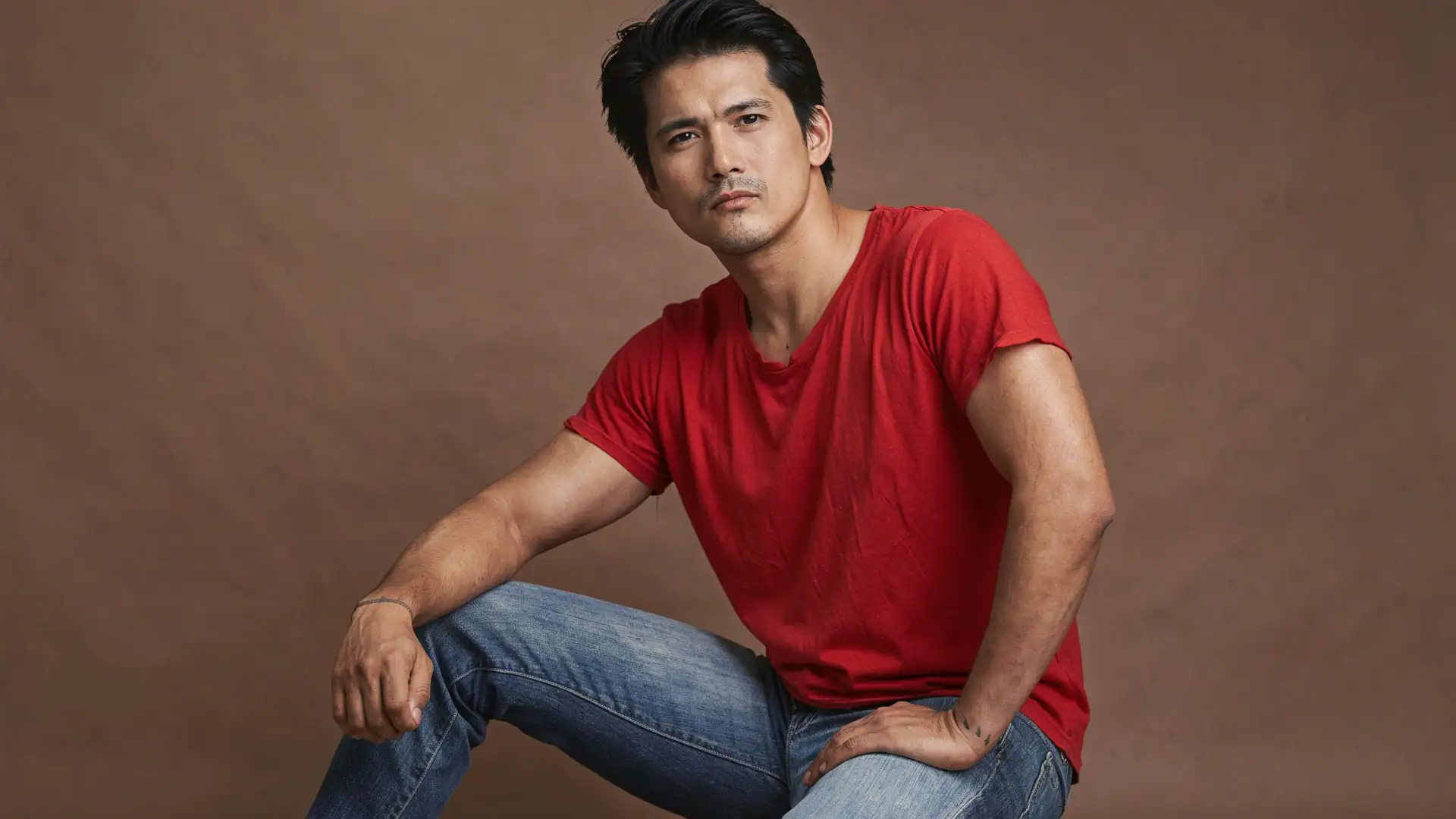
Robin Padilla: From action star to senator, his controversies became his credentials.
Every scandal that should have ended Robin Padilla’s career somehow made him bigger. His story isn’t just about one man’s notoriety — it’s a mirror held up to the Filipino public’s complicated relationship with fame, morality, and redemption.
In a country where the line between showbiz and politics has always been blurry, no one has straddled it more boldly than Robin Padilla. Known as the Bad Boy ng Pilipinas, he turned firearm convictions into street cred, religious conversion into a rebrand, and political loyalty into a landslide Senate victory. His biography reads less like a cautionary tale and more like a masterclass in controversy management — Filipino style.
From the gritty action sets of the late ’80s to the Senate floor, Robin’s journey is a case study in how scandal can be weaponized into influence. Women, guns, religion, and raw politics — all of it played out in the court of public opinion, and somehow, he kept winning.
Early Stardom and the ‘Bad Boy’ Persona
Robin Padilla burst onto Philippine cinema in the late 1980s as a teenage action star — muscular, defiant, and photogenic in a way that cameras couldn’t ignore. He emerged from a showbiz dynasty (his father is actor Roy Padilla), but Robin refused to trade solely on family name. Instead, he built an identity rooted in the visceral appeal of the outsider: the kid from the streets who fights back.
Through a string of action films in the early ’90s, Robin became the template for the Filipino action hero. Not polished, not softly romantic, but rough-edged and unapologetically masculine. He carved his own niche: the vigilante, the lone wolf, the man who answered to nobody.
This persona was not a costume. It was a prophecy. The “bad boy” image he cultivated on screen would eventually collide with real-world consequences — and somehow make him more beloved for it.
The Women in His Life
Few aspects of Robin Padilla’s career have generated more column inches than his romantic history. Over the decades, he has been linked to an extraordinary number of women — actresses, beauty queens, and socialites — making him the perpetual subject of tabloid fascination.
Among his most high-profile relationships were those with Liezl Sicangco (his first wife and mother of four of his children), Mariel Rodriguez (whom he later married), and several prominent co-stars. Each relationship became a public event — the courtship covered breathlessly by entertainment shows, the breakups dissected by fan communities, the reunions celebrated like national holidays.
The fascinating paradox: behavior that might have earned a “player” label in another cultural context instead reinforced Robin’s appeal as intensely passionate and emotionally unguarded. He loved loudly, publicly, and with apparent abandon. For many fans, this was evidence of authenticity rather than recklessness.
Conviction for Illegal Possession of Firearms
In 1994, Robin Padilla was convicted for illegal possession of firearms. The arrest sent shockwaves through the Philippine entertainment industry. Here was the country’s biggest action star, facing real criminal charges, in a country where gun culture and legality exist in perpetual tension.
| Year | Event | Public Reaction |
|---|---|---|
| 1994 | Convicted for illegal firearms possession | Shock; media frenzy |
| 1995 | Sentenced; began serving time at New Bilibid | Mixed — sympathy vs. condemnation |
| 1998 | Granted conditional pardon by Pres. Ramos | Celebrated as comeback; career resurged |
| 2016 | Absolute pardon granted by Pres. Duterte | Path cleared for Senate run |
The trial and imprisonment should have been career-ending. Instead, it became mythology. When President Fidel Ramos granted him a conditional pardon in 1998, the return felt less like a celebrity getting off easy and more like a folk hero’s resurrection. His authenticity as a “real tough guy” was, perversely, now certified.
This moment is key to understanding the Robin Padilla paradox: in Philippine pop culture, suffering — especially dramatic suffering — can be transfigurative. The prison stint didn’t mark him as a criminal in the public mind. It marked him as a man who had truly lived.

Celebrity Lifestyle Wellness Collection — 6 Printable Planners & Trackers
Step into your main-character era with this glamorous A4 printable bundle: weekly diet planner, grocery list, water tracker, weight tracker, habit tracker, and monthly progress sheet — all with a pink-gold celebrity aesthetic. Instant digital download. From PinoyShowbizChika.com.
Get It on Gumroad →Conversion to Islam
No chapter in Robin Padilla’s life generated more debate than his conversion to Islam — which began not after his release, but while he was still serving time at the national penitentiary. Among the missionaries who visited the prison, it was the Muslim imams who had the patience to answer his many questions about faith and spirituality. He found in Islam a framework that resonated deeply, and converted — taking the name Abdul Aziz, meaning “Servant of the Almighty.”
Critics questioned the sincerity of the conversion, dismissing it as a phase or a publicity stunt. Others saw political undertones, given the Philippines’ complex relationship with its Muslim Mindanao population. The controversy was real and immediate. But Robin leaned into his faith with visible conviction — discussing Islamic teachings in interviews, building a Muslim school in Fairview, Quezon City, and spearheading relief efforts for Marawi after the 2017 siege.
What could have been a PR disaster became a rebranding. The rebellious outsider was now also a spiritual seeker — a combination that, in the Philippine media landscape, was irresistible. The conversion transformed from a scandal into a redemption arc.
Political Connections and Duterte Closeness
When Rodrigo Duterte swept to the presidency in 2016, Robin Padilla was among the loudest celebrity voices in his corner. The alignment was almost too perfect: two men who cultivated images of raw, uncompromising masculinity, who spoke plainly and provocatively, and who positioned themselves as men of the people unbothered by elite opinion.
Robin appeared at Duterte campaign events, endorsed his drug war publicly, and consistently defended the administration through its most controversial moments. This polarized his fanbase sharply. For Duterte supporters, Robin’s loyalty was proof of his authenticity. For critics, it was evidence of dangerous complicity. Notably, it was Duterte who in 2016 granted Robin absolute pardon — restoring his civil and political rights and making him eligible to run for public office.
The alignment illustrates a recurring pattern in Philippine celebrity politics: loyalty functions as identity. Compare this to other high-profile celebrity rivalries that have defined public discourse — the pattern of using platform as political weapon is deeply embedded in Philippine showbiz DNA.
📊 Robin Padilla’s Public Approval — Key Career Moments
* Illustrative estimates based on documented polling, election results, and survey data.
From Actor to Senator
In May 2022, Robin Padilla ran for senator under the PDP-Laban slate and won by an enormous margin, placing among the top vote-getters in the midterm elections. It was not a close race. It was a rout. And it prompted immediate and intense debate: what does it mean when a country elects a man with no legislative experience to one of its highest offices?
His voters weren’t confused — they knew who they were electing. They were making a statement about who they trusted: not technocrats and political dynasties, but someone who had lived messily in public and survived. His passionate fan base, cultivated over three decades, translated directly into electoral capital.
Shut Up Your Debt Collector — US Edition
Debt collectors use fear and illegal threats — and most Americans don’t know their rights. This guide gives you 20 real collector threats, 20 FDCPA-grounded rebuttals, phone scripts, ready-to-use legal letters, and a violation checklist. Stop being intimidated. Start fighting back.
Get It on Gumroad →Other Notable Controversies
Beyond the headline events, Robin Padilla has accumulated a long list of smaller controversies that, taken together, paint the portrait of a man constitutionally incapable of avoiding the spotlight. He has clashed publicly with fellow celebrities, made inflammatory statements on territorial disputes and constitutional revision, and repeatedly positioned himself as a straight-talking outsider willing to say what others won’t.
His relationship with the media has always been combative — accusing journalists of bias, storming out of interviews, and using social media to bypass traditional gatekeepers. In this sense, he was ahead of the curve, understanding before most that direct-to-audience communication could be more powerful than managed press relations.
The entertainment industry’s complex relationship with controversy is one Robin has navigated better than almost anyone. It’s a fascinating contrast to how the Padilla family drama involving his half-sister has played out very differently in terms of public sympathy.
The Paradox of Popularity Through Scandal
Why does it work? Why does Robin Padilla emerge from each controversy not just intact but reinforced? The answer lies at the intersection of Filipino cultural psychology, media dynamics, and the particular appeal of the flawed hero.
Philippine popular culture has always had a deep affinity for the taong bayan — the man of the people who is recognizably human, with visible flaws and a messy history. This is a culture shaped by centuries of colonial narrative in which the formally powerful were often corrupt and the informally powerful were often romanticized. Robin fits the archetype: simultaneously transgressive and sympathetic, dangerous and lovable.
There is also the structural role of fan culture, which operates in the Philippines with an intensity rivaling anywhere in the world. As detailed in our look at how fan clubs shape celebrity careers, dedicated fan bases create narratives of loyalty and redemption that insulate their idols from mainstream criticism. For Robin’s fans, every controversy is evidence of his realness, and every comeback is proof that their faith was warranted.
In a democracy where institutions are often mistrusted, a celebrity who has visibly defied those institutions — and survived — carries symbolic power. Robin’s prison stint, his pardon, his religious conversion, his Senate win: each is a chapter in a story Filipinos recognize as their own. Not a story of smooth success, but of turbulent, improbable survival.
Conclusion: Still Standing
Robin Padilla’s fame is not incidental to his controversies — it is constructed from them. Remove the firearms conviction and you lose the prison legend. Remove the love affairs and you lose the passionate humanity. Remove the Duterte alignment and you lose the populist credibility. Remove any piece of the scandal mosaic and the picture becomes less vivid, less compelling, less Robin.
His story is ultimately not about one man’s remarkable luck or Teflon skin. It is about what a society reveals when it decides who deserves forgiveness and who deserves power. The Filipino public, confronted repeatedly with Robin Padilla’s very human failures, has chosen again and again to see not a cautionary tale but a mirror — a reflection of the nation’s own messy, complicated, perpetually unfinished story.
In the court of public opinion, Robin Padilla hasn’t just survived. He’s served as judge, defendant, and crowd favorite — all at once. And the verdict, so far, keeps coming back the same: not guilty, and oddly beloved.