How Social Media Changed the Way Love Teams Are Marketed in the Philippines

How Social Media Changed the Way Love Teams Are Marketed in the Philippines
Long before Twitter trending topics and TikTok edits, Filipino audiences had already mastered the art of fandom. Crowds screamed at DZBB radio stations hoping to catch a glimpse of Nora and Tirso. Fans clipped photos from Movie Flash and Yes! magazine and pasted them on bedroom walls like sacred relics. Love teams — those carefully curated pairings of actors and actresses designed to make audiences believe in on-screen romance — have always been a cornerstone of Philippine show business. But the platform has changed everything. Social media didn’t just give fans a louder voice; it fundamentally rewired how studios, managers, and networks build, sell, and sustain a love team.
This is the story of that transformation.
A Brief History: From Radio Romances to Instagram Reels
Match Like Your Faves — Couple Watches
The most iconic love teams are always coordinated. Rock matching couple watches and channel your inner KathNiel or DonBelle energy every single day.
Shop Couple Watches →The Old Formula: Gatekeepers and Controlled Narratives
To understand just how radical the social media shift is, you first need to appreciate how love teams were built before platforms handed microphones to everyone. In the pre-internet era, marketing a love team was an exercise in controlled scarcity. Studio publicists decided what the public knew. Columnists like Ricky Lo and Lolit Solis held enormous power — a blind item planted in a broadsheet could make or break a tandem overnight. Networks dictated which couples appeared together at events, which magazines got the exclusive cover shoot, and which talk shows hosted the “kilig” moments that kept fans hooked.
Fans were consumers, not participants. They could write letters, join fan clubs, and show up at mall tours, but their collective voice had no institutional channel. The industry spoke; fans listened. If a love team broke up, management issued a short statement and moved on. There was no comment section to storm, no Twitter Space to crash.
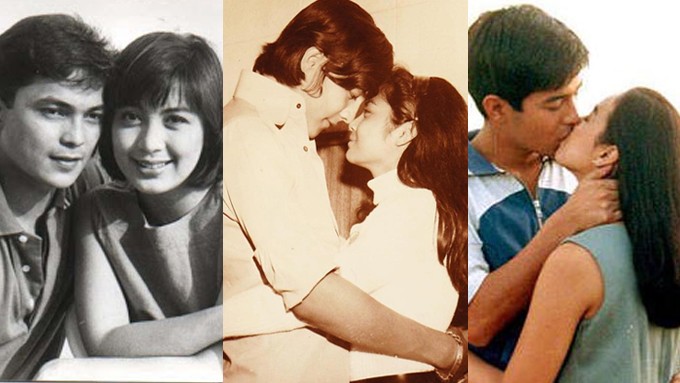
The products of this era — Vilma and Bobot, Sharon and Gabby, and the wider orbit of Gabby, Sharon, and Richard — became legends precisely because so much was left to the imagination. The mystique was the marketing. Sharon Cuneta’s own devoted fan base, the Sharonians, were a force unto themselves — proof that even before social media, a Filipino star could inspire a fandom with the discipline and loyalty of a small army.
Then vs. Now: How Love Team Marketing Has Evolved
| Marketing Element | Pre-Social Media Era | Social Media Era |
|---|---|---|
| Content Control | Studios & publicists only | Fan accounts, official pages, and the stars themselves share content |
| Fan Engagement | Letters, mall tours, physical fan clubs | Real-time Twitter trends, TikTok duets, Spotify streams, comment floods |
| Campaign Speed | Weeks (magazine lead time, TV schedules) | Minutes (a tweet, a photo, a reel goes viral instantly) |
| Breakup Handling | One press statement, then silence | Days-long discourse, trending hashtags, fan breakdowns in comment sections — see how love team breakups unfold today |
| Metrics of Success | TV ratings, box-office gross, magazine sales | Hashtag reach, follower growth, YouTube views, Spotify streams, TikTok plays |
| Monetization | Endorsements brokered by managers | Direct brand deals via Instagram, affiliate links, Shopee/Lazada live selling |
| Fan Power | Passive audience | Active co-creators — fans edit videos, write shipping fics, organize streaming parties |
| Era Example | TV Era AlDub pre-Twitter | AlDub breaking Twitter records |
The AlDub Rupture: When Fandom Became a Force of Nature
If there is one single event that proves social media didn’t just help love team marketing — it transformed it — it is the AlDub phenomenon. What began as an accidental “meet-cute” between Alden Richards and Yaya Dub (Maine Mendoza) on the noontime show Eat Bulaga in July 2015 became something Philippine entertainment had never seen: a love team born entirely on live television, sustained entirely by social media, and exploded into a global conversation in real time.
The couple never physically met on screen for weeks — their courtship played out in split-screens across live broadcast. Fans on Twitter narrated every micro-moment as it happened. #ALDUBTamangPanahon generated over 41 million tweets in a single day, shattering world records and landing on CNN. No publicist planned it. No studio executive orchestrated the trending. The fans — millions of them — collectively decided this mattered, and they made the world pay attention.
This was the inflection point. After AlDub, every network and management team in the country updated their playbook. Love teams were no longer just cast on television; they were launched as social media properties.
Stream Your Faves in Full Kilig Sound
Whether you’re rewatching every AlDub split-screen moment or streaming the newest KathNiel OST on Spotify, a great pair of wireless headphones makes the experience complete.
Shop Wireless Headphones →Where Filipino Love Team Fans Live Online
Not all platforms are created equal for love team fandoms. Twitter (now X) remains the battleground for trending hashtags and real-time commentary. Instagram is the home of aesthetics — the curated couple photos, fan edits, and behind-the-scenes glimpses that keep fans emotionally invested. TikTok has become the discovery engine, introducing younger audiences to love teams through viral edits and challenges. YouTube hosts the long-form content: vlogs, music videos, and full episodes that rack up millions of views.
*Estimated based on fan community size and activity data. Percentages reflect relative dominance, not unique user counts.
The New Love Team Playbook: Strategy in the Age of Algorithms
Managing a love team in 2025 is closer to running a media brand than booking actors for a teleserye. Modern management teams hire social media managers, content strategists, and even data analysts to track engagement curves. Every moment of “kilig” between a pair is a content opportunity — and the content machine runs 24/7.
The strategy has several distinct layers. First, there’s the content cadence: coordinated Instagram posts, regular YouTube vlogs, TikTok challenges, and Twitter replies that maintain a constant presence in the fan’s feed. DonBelle, for instance, mastered this with their “Star Magic Inside News” appearances and behind-the-scenes content that gave fans the sense of always being close to the action. Matet and Ian similarly leveraged candid moments that felt authentic rather than staged.
Second is strategic ambiguity. In the pre-social media era, management kept real relationships secret to protect the fantasy. Today, the calculus is more complex. Networks like to maintain plausible deniability — the pair is “just close friends” — while simultaneously releasing couple-coded content that fans will dissect for hours. This creates an infinite loop of speculation that keeps the love team trending without anyone having to commit to an actual announcement. The history of Philippine showbiz love teams is full of these calculated ambiguities.
Third is cross-platform storytelling. A couple may release a teaser photo on Instagram, follow up with a YouTube vlog reaction, then trend on Twitter as fans connect the dots. The story unfolds across platforms, rewarding fans who follow everywhere. This mirrors how modern TV shows release content across social channels to build anticipation — except the product being sold is not just a show, but the idea of a relationship itself.
It’s also worth noting how this has affected noontime show culture. Programs like It’s Showtime now structure segments specifically around viral moments, with hosts actively encouraging fans to trend hashtags during the live broadcast. The show and its social media life are inseparable.
Glass Skin Toner Refill — K-Drama Inspired Glow
Your fave love teams always look flawless on screen and on Instagram. Level up your own skincare routine with a glass skin toner that keeps you camera-ready for every fan event and mall show.
Shop Glass Skin Toner →Fan Power: From Passive Viewers to Active Co-Creators
The most seismic shift social media brought to love team culture is not in how networks market their stars — it’s in how fans participate in that marketing. Philippine fan culture has always been intense, but social media turned intensity into infrastructure.
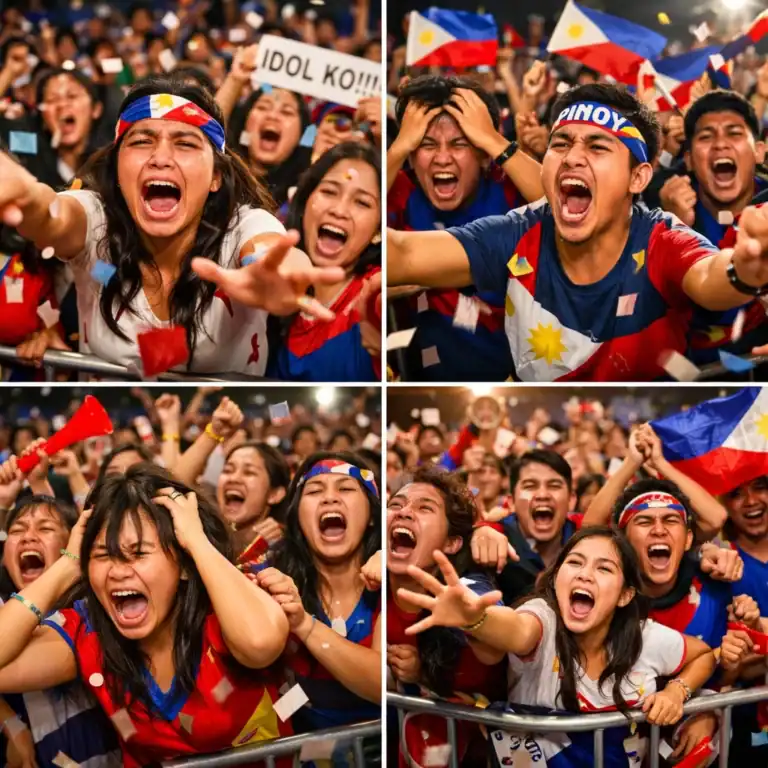
Today’s fan armies are organized like corporations. They have officers, treasurers, and spokespeople. They pool money for streaming parties to push a love team’s OST up Spotify charts. They coordinate mass reporting of anti-fan accounts. They draft and execute “blocking parties” before major announcements. They fill Google Docs with streaming guides, complete with links, schedules, and instructions to use VPNs to access region-locked content. The legendary rivalry between KathNiel and LizQuen fans exemplifies just how high-stakes and organized this can get.
Fan-made content now rivals official output in quality and reach. Shipping edits on YouTube accumulate millions of views. Fan fiction communities on Wattpad build entire alternate universes around love teams. TikTok video editors cut and rearrange behind-the-scenes footage into moments that look more romantic than anything the actual show produced. This user-generated content is essentially free marketing — and management teams have learned to cultivate it rather than suppress it.
But fandom has a shadow side too. The breakup of a major love team — documented meticulously in our piece on why love teams break up — can trigger an outpouring of grief, harassment, and blame that plays out publicly on social media. The same infrastructure that amplifies love can amplify pain. Family drama in the spotlight and other personal controversies are no longer contained — they become community events.
What Drives Love Team Trend Cycles on Social Media?
- New on-screen project announcement — 30%
- Real-life “ship” moment (candid, outing) — 22%
- Fan streaming party / chart push — 18%
- Controversy or breakup rumors — 15%
- Awards nominations & wins — 10%
- Brand endorsement reveal — 5%
*Estimated distribution based on social media trend patterns observed 2020–2024.
The Authenticity Economy: When Fans Demand the Real Thing
One of the most interesting pressures social media has introduced is the demand for authenticity. In the old era, fantasy was the product — audiences happily accepted the carefully managed illusion of a romance. Today’s fans are more sophisticated. They have seen enough behind-the-scenes content, enough candid vlogs, enough unguarded Instagram Stories to develop a sense of when something feels manufactured.
This is why love teams that feel “real” tend to generate the most fanatical followings. JaDine’s eventual confirmation of their real-life relationship sent shockwaves of joy through their fandom — because it validated years of speculation and investment. Conversely, a love team that feels purely transactional, where the chemistry seems engineered and the content feels scheduled, tends to plateau quickly.
Management teams now walk a razor’s edge: manufacture enough “kilig” content to keep algorithms satisfied, but allow enough authentic glimpses of the real dynamic to maintain fan investment. It is a tightrope act that older studios never had to perform, because no one was watching closely enough to tell the difference.
MayWard’s journey illustrates this tension beautifully. Their fanbase grew not just from their on-screen projects but from the ways fans perceived their genuine care for each other in candid moments. Similarly, KimXian maintained their following through a mix of professional collaboration and moments that felt human rather than scripted.
Never Miss a Moment — Get a VPN
Fan streaming parties sometimes require accessing region-locked content or foreign platforms to push your love team up the global charts. A reliable VPN keeps you in the action wherever you are.
Get a VPN →Love Teams as Brands: The Commercial Evolution
Social media didn’t just change how love teams are marketed — it changed what a love team actually is as a commercial property. In the network era, a love team was a content asset: you used the pairing to sell TV ratings and movie tickets, and the studio captured most of the value. In the social media era, a love team is a brand platform.
Consider what DonBelle or JoshLia represents commercially. Beyond their Star Cinema films and ABS-CBN teleseryes, their tandem image is a vehicle for food delivery endorsements, telecom commercials, beauty brand campaigns, and live selling streams on Shopee and TikTok Shop. The love team has become a lifestyle brand, and fans are not just viewers — they are loyal consumers who buy products specifically because their favorite pair endorses them.
This commercial evolution has also democratized love team creation. Before social media, only major networks could launch a love team. Today, a pair of content creators who happen to have chemistry can cultivate a “fan-made” ship organically on YouTube or TikTok, and eventually attract brand deals and network attention. The pipeline has been reversed: instead of the network discovering talent and creating a love team, fans sometimes discover the love team first and bring it to the network’s attention.
Notable Philippine Love Teams Across Eras
| Love Team | Era | Peak Platform | Signature Moment | Read More |
|---|---|---|---|---|
| Vilma & Bobot | Cinema 1960s–70s | Film, Radio | Box-office sweethearts of the Golden Age | Read → |
| Guy & Pip | Cinema 1960s–70s | Film, Radio | Beloved tandem of the same Golden Age era | Read → |
| Sharon & Gabby | TV 1980s–90s | Film, Television | The era’s biggest love team; Sharon’s fans the legendary Sharonians | Read → |
| Gabby–Sharon–Richard | TV 1980s–90s | Film, TV, Tabloids | The love triangle that kept the nation talking | Read → |
| AlDub | 2015 | 41M tweets in 24 hours — world record | Read → | |
| KathNiel | 2012–present | Twitter, Instagram | Box-office hits, global fan base | Read → |
| LizQuen | 2013–2020 | Instagram, Twitter | Defined the millennial love team | Read → |
| JaDine | 2014–2020 | Instagram, YouTube | Confirmed real-life relationship | Read → |
| MayWard | 2016–present | YouTube, TikTok | Dedicated fanbase across platforms | Read → |
| DonBelle | 2021–present | TikTok, YouTube | Post-pandemic digital-native tandem | Read → |
| JoshLia | 2022–present | TikTok, Instagram | Gen Z fandom powerhouse | Read → |
| KimXian | 2012–present | Instagram, YouTube | Long-running tandem endurance | Read → |
What’s Next: AI, Parasocial Bonds & the Future of the Love Team
As we look ahead, the love team as a cultural product shows no signs of fading — if anything, social media has made it more durable. Fans today have a parasocial relationship with their favorite pairs that goes deeper than any previous generation of viewers. They feel they know these people intimately: their food preferences, their inside jokes, their families. The social media archive means nothing is ever truly forgotten — a fan can go back and watch years of content, deepening their investment at any time.
The challenge for the industry is managing this intensity sustainably. When love teams break up — and many inevitably do — the fallout now happens in public, in real time, across every platform simultaneously. The emotional labor placed on both fans and the stars themselves has grown enormously. The anatomy of a love team breakup in the social media age is a topic that deserves its own serious examination.
The next frontier may be AI-generated content and deepfake fan edits — tools that will make the line between real and manufactured moments even blurrier. Management teams will need to be more thoughtful, more transparent, and more human than ever. And fans, who have always been the most important actors in this drama, will continue to evolve alongside the platforms that empower them.
Whether you were a proud Sharonian — one of Sharon Cuneta’s loyal fans — cheering at the cinema in the ’80s, or you’re discovering JoshLia on TikTok today, one thing remains constant: Filipinos love a love team. Social media didn’t create that impulse — it just gave it a megaphone, a trending hashtag, and a streaming party.