The Role of Fan Clubs in Pushing Love Teams to Network Stardom

The Role of Fan Clubs in Pushing Love Teams to Network Stardom
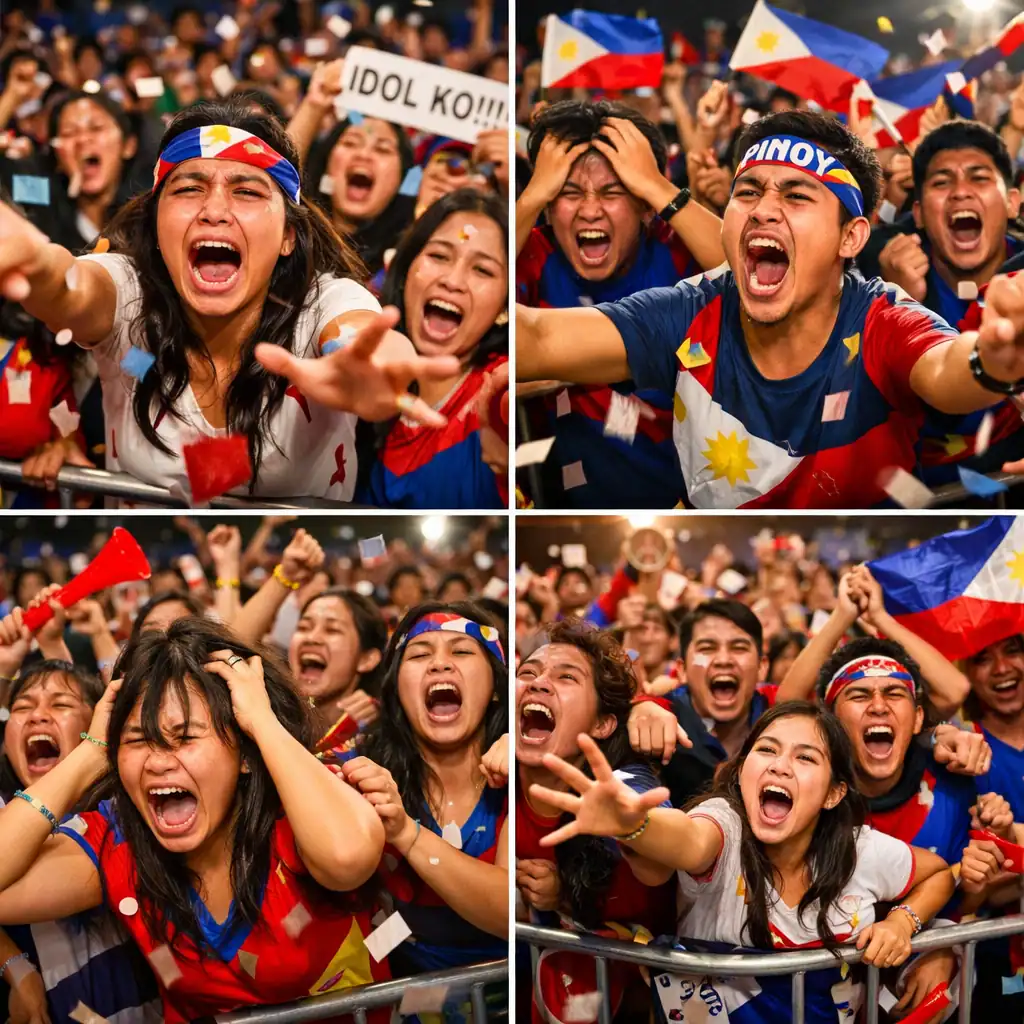
Philippine fan clubs — the organized force behind every love team’s rise to network stardom.
In Philippine showbiz, few forces are as quietly unstoppable as an organized fan club on a mission. Before a love team even graces a primetime billboard, legions of fans have already been trending hashtags, mass-streaming teasers, and filling cinema seats in coordinated block screenings. Fan clubs are not passive spectators — they are the engine room of network stardom.
This article explores the three pillars that make fan clubs indispensable to Philippine entertainment: fan mobilization, network recognition, and cultural imprint. Understanding these pillars explains why love teams — unique to Pinoy pop culture — continue to dominate ratings, box office, and brand deals decade after decade.
The Love Team Phenomenon in the Philippines
A love team, in the Philippine context, is more than an on-screen pairing. It is a carefully cultivated romantic partnership between two artists — usually under the same network — whose chemistry is as much a product of audience projection as it is of scriptwriting. The audience does not just watch them; they invest in them.
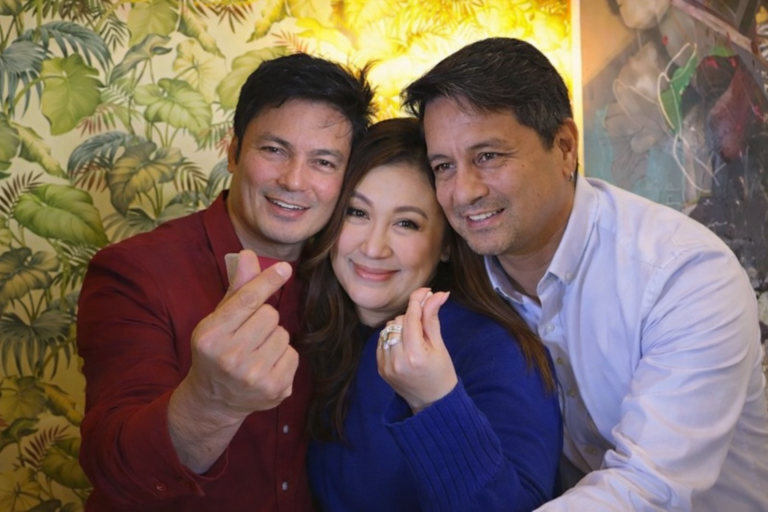
The roots stretch back decades. Vilma Santos and Bobot Mortiz in the 1960s and 70s gave way to the enduring cultural phenomenon of Sharon Cuneta and Gabby Concepcion, whose tandem defined an entire era of Filipino romance. The 1980s and 90s produced Guy and Pip, whose playful chemistry translated seamlessly from variety TV into a devoted fandom. By the 2010s, KathNiel (Kathryn Bernardo and Daniel Padilla) had turned love team fandom into a digital-age phenomenon — trending worldwide, selling out arenas, and commanding eight-figure brand deals.
| Era | Love Team | Network | Defining Medium |
|---|---|---|---|
| 1960s–70s | Vilma & Bobot | Various | Film & TV movies |
| 1980s–90s | Sharon & Gabby | ABS-CBN | Blockbuster films |
| 1990s–2000s | Sharonian (Sharon & Robin) | ABS-CBN | Teleserye & talk shows |
| 2000s | JaDine (James & Nadine) | ABS-CBN | Teleserye & films |
| 2010s | KathNiel | ABS-CBN | Teleserye, film, social media |
| 2010s | AlDub (Alden & Yaya Dub) | GMA / TV5 | Noontime variety TV |
| 2020s | DonBelle (Donny & Belle) | ABS-CBN | TikTok & streaming |
| 2020s | MayWard (Maymay & Edward) | ABS-CBN | Digital fandom, OPM |
Table 1: Philippine love teams across the decades — network investment follows proven audience loyalty.
Why do networks keep investing? The answer is simple: love teams deliver guaranteed returns. A teleserye with a beloved tandem attracts loyal weekly audiences, their movies regularly crack the PHP 100M box office threshold, and their collective endorsement clout multiplies the individual star power of each member. As explored in our piece on how social media shapes love teams today, that commercial pull is now further amplified by digital fandom with global reach.
But none of this happens organically. Love teams thrive because of organized fan clubs working behind the scenes — and often very visibly in front of them.
✨ Live Like Your Fave Star
The Celebrity Lifestyle Wellness Collection — 6 printable A4 planners & trackers styled in pink-gold glamour. Diet planner, water tracker, weight tracker, habit tracker, grocery list, and monthly progress sheet. Instant digital download.
Get It Now – PHP 300 →Anatomy of a Fan Club
Philippine fan clubs are not informal chat groups. The most organized ones operate with structures that rival small nonprofits: an elected president, vice-presidents per platform (Twitter, Facebook, TikTok), regional chapter heads across Luzon, Visayas, and Mindanao, and dedicated “streaming teams” assigned to drive real-time viewership numbers.
The emotional core of any fan club is loyalty framed as guardianship. Members see themselves not merely as fans but as stewards of their love team’s reputation and success. This emotional investment translates into coordinated, sustained effort — the kind networks cannot manufacture with marketing budgets alone.
Consider how KathNiel’s fan base mobilized during the launch of their teleseryes. Members would coordinate “mass watch” schedules to ensure household TVs were tuned in at broadcast time, boosting live ratings for Nielsen’s people meters. They would simultaneously flood Twitter with trending hashtags — not once, but wave after wave throughout the episode’s runtime. This was not spontaneous; it was planned weeks in advance, with timelines circulated through official fan club channels.
This level of organization creates something networks deeply value: predictability. When you know a love team’s fan base will show up — at the cinema, at the ratings counter, on social media — you can plan programming, marketing, and endorsement calendars around that certainty.
Fan Clubs as Engines of Stardom
The mechanisms by which fan clubs translate devotion into stardom operate across four interconnected channels: social media, ratings, box office, and brand endorsements. Each reinforces the others in a feedback loop that is very difficult to interrupt once it starts turning.
Social Media Mobilization
Twitter (now X), Facebook, and TikTok have transformed fan organizing from word-of-mouth to worldwide visibility. A coordinated trending campaign from a Philippine fan club can push a love team’s hashtag to global top trends within hours — which then becomes a news story, which attracts more casual viewers, which further inflates the numbers.
The social media dynamics around Philippine love teams now extend to TikTok edits that regularly hit millions of views from Filipino communities worldwide, Discord servers where international fans organize watch parties across time zones, and YouTube fan compilations that function as unofficial trailers for new projects.
Fan Club Digital Activity — Estimated Share of Online Buzz by Platform (2024)
Chart 1: Relative fan club digital activity by platform. TikTok and Facebook dominate in raw volume; Twitter / X drives trending momentum. Illustrative estimates based on industry observation.
Ratings Support
Philippine television ratings are still measured largely by Nielsen’s people meters in sampled households. Fan clubs know this, and they target it. “Mass watch” drives specifically instruct members in Nielsen-sampled barangays to tune in live rather than via streaming, since only broadcast numbers count in the traditional ratings system. This focused effort can mean the difference between a show landing at #1 versus #3 in its timeslot — a gap that determines whether a network greenlights a second season or extends a teleserye’s run.
Box Office Power
Coordinated block screenings — where fan clubs reserve entire cinema halls for a love team’s movie opening — have become a fixture of Philippine film marketing. These screenings guarantee opening-weekend numbers that attract media coverage, and they create shared fan experiences that generate fresh social media content, extending the film’s viral life.
| Love Team | Mechanism | Outcome | Notable Example |
|---|---|---|---|
| AlDub | Live TV trending + mass watch | 41.6M tweets in one day (2015 record) | Tamang Panahon concert, Phil. Arena |
| KathNiel | Block screenings + trending brigades | Multiple PHP 200M+ box office films | She’s Dating the Gangster (2014) |
| JaDine | YouTube streaming + fan merch | Sold-out arena concerts nationwide | Never Not Love You |
| DonBelle | TikTok edits + Discord parties | ABS-CBN streaming platform growth | He’s Into Her Season 2 |
| LizQuen | Award voting + hashtag campaigns | Multiple MMFF wins | Everyday I Love You (2015) |
Table 2: Fan club mobilization strategies and their measurable outcomes.
The AlDub Case Study
“AlDub Nation didn’t just watch Eat Bulaga — they became the show’s marketing department, public relations team, and ratings engine all at once.”
The AlDub phenomenon remains the most dramatic example of fan power in Philippine broadcast history. What began as an accidental on-screen interaction between Alden Richards and Maine “Yaya Dub” Mendoza on Eat Bulaga in 2015 became, within weeks, a cultural earthquake. AlDub Nation broke the Guinness World Record for most tweets about a single TV episode in a 24-hour period: 41.6 million tweets on October 24, 2015, during the Tamang Panahon concert at the Philippine Arena, which sold out all 50,000 seats.
GMA Network’s ratings during AlDub segments routinely doubled, and brand partners lined up to attach their names to the tandem. None of this happened because of network planning alone — it happened because AlDub Nation organized, amplified, and sustained the momentum at every step.
Networks Respond to Fan Power
The relationship between fan clubs and networks is, at its most functional, a conversation — conducted in ratings points, trending topics, and ticket sales rather than words. Networks have long understood that fan enthusiasm is a signal, not just a byproduct.
ABS-CBN and GMA both maintain informal intelligence on fan club activity. Programming decisions — extending a teleserye’s episode count, greenlighting a follow-up film, assigning a love team to a prime advertising slot — are informed by evidence of fan mobilization. A teleserye that consistently trends nationally during its timeslot tells a network executive something that a pilot focus group cannot: this audience is active, loyal, and commercially valuable.
Fan clubs create what might be called “proof of demand” — a visible, quantifiable demonstration that an audience exists and is ready to spend. This proof de-risks network investment. When a fan club organizes 200 block screening seats a week before a film opens, that is not just ticket revenue — it is a signal to theater chains to allocate more screens, which boosts opening-weekend numbers, which attracts media coverage, which draws casual viewers who are not members of any fan club at all.
The rivalry between KathNiel and LizQuen fandoms illustrates another dimension of this relationship: competitive fan engagement drives both tandems’ networks to maintain and invest in both. When one fan base floods Twitter, the other responds in kind. Networks benefit from this competition because it sustains visibility for multiple bankable properties simultaneously.
Cultural Impact of Fan Clubs
Beyond the mechanics of ratings and revenue, fan clubs have woven themselves into the social fabric of Filipino life. For many members — particularly young women aged 14 to 30 — a fan club is a barkada, a community of friends built around shared devotion to a love team. The shared rituals of fan life (streaming nights, anniversary celebrations, fundraisers for the stars’ chosen causes) create genuine social bonds that outlast individual projects or even the love teams themselves.
This community dimension has a philanthropic expression. Fan clubs regularly organize charity drives in their idols’ names: feeding programs in underserved communities, relief operations after typhoons, scholarship funds. The DonBelle fan community, for instance, has conducted multiple relief drives coordinated through their social media networks.
Parasocial investment — the psychological phenomenon of feeling personally close to a public figure — runs deep in Philippine fan culture. Fans celebrate a love team’s milestones as if they were family events, and feel genuine grief when love teams break up. This emotional depth is precisely what makes fan clubs so commercially potent: their members are not casual consumers. They are stakeholders.
The cultural reach of fan clubs also extends geographically. OFW fan communities in the Middle East, Europe, and North America consume Philippine entertainment voraciously and amplify it to international audiences. A viral TikTok fan edit originating from a Manila fan club can be reshared by members in Dubai, Toronto, and Riyadh within hours — giving Philippine love teams a global footprint that no network marketing budget could purchase outright.
The Double-Edged Sword
For all their power, fan clubs create pressures that can be genuinely corrosive — for the artists, for the networks, and for the broader culture of Philippine entertainment.
| Positive Impact | Negative Impact |
|---|---|
| Sustained ratings support and viewership | Pressure on artists to maintain artificial chemistry |
| Box office mobilization for opening weekends | Toxic fan wars between rival fandoms |
| Brand visibility that attracts endorsement deals | Network manipulation of fan expectations for profit |
| Community-building and social causes | Harassment of artists’ personal relationships |
| Global reach via OFW fan networks | Identity reduced to the tandem, limiting solo careers |
Table 3: The dual nature of fan club power in Philippine entertainment.
The demand that artists maintain their on-screen romantic chemistry at all times — regardless of their actual relationship status — places enormous psychological strain on love team members. The aftermath of love team breakups often reveals just how heavily the commercial machine had depended on that chemistry, and how violently fan expectations can collide with personal reality.
Fan wars between rival fandoms — KathNiel versus LizQuen, for example — can escalate into harassment campaigns targeting both fans and artists alike. Networks, aware that rivalry drives engagement, have occasionally stoked these wars rather than dampened them — a morally dubious but commercially rational choice.
There is also a structural trap built into the love team model: an artist whose identity is defined almost entirely by a tandem faces significant obstacles in building a credible solo career, as explored in the context of Shaina Magdayao and John Lloyd Cruz’s pairing and how individual trajectories diverge after a tandem’s peak.
The Future of Fan Clubs and Love Teams
Philippine fan culture is evolving rapidly, driven by platform shifts and generational change. The centralized fan club structure — with its elected officers and Facebook group administrators — is gradually giving way to more fluid digital formations: TikTok collective accounts, Discord servers organized around specific projects rather than permanent tandems, and Spotify streaming parties coordinated via group chats.
Subscription-based communities are emerging, where dedicated fans pay monthly fees for exclusive content, early access to announcements, and closer interaction with their idols. This model monetizes the parasocial bond directly and creates a more stable financial foundation for fan organizing.
International fandom will continue to grow. The global diaspora of Filipinos — particularly the millions of OFWs — ensures that Philippine love teams will always have an international audience ready to amplify and fund their success. Platforms like TikTok and YouTube make geographic distance irrelevant.
Streaming-era metrics will shift what fan clubs optimize for. As Philippine networks increasingly distribute content via streaming platforms, fan clubs will adapt their coordination strategies to drive stream counts rather than Nielsen points — a change already visible in how DonBelle fans and the JoshLia fan community operate.
Conclusion
Fan clubs are the backbone of love team success in Philippine entertainment — not as a supporting act, but as a primary driver. They create the ratings that justify network investment, the box office numbers that make studios greenlight sequels, the endorsement metrics that attract brands, and the cultural staying power that transforms a teleserye tandem into a generational icon.
From the early days of Guy and Pip to the digital battalions behind DonBelle and MayWard, the technology has changed but the core truth has not: in Philippine showbiz, organized fandom is not an audience. It is a co-creator.
Love teams will continue to rise and fall. Some will endure as cultural institutions — as Sharon and Gabby have — while others will break up or fade quietly from primetime. But the power of organized fandom to shape, sustain, and sometimes strain the stars it loves will remain a defining feature of Philippine entertainment for as long as the love team exists.
And in the Philippines, the love team is not going anywhere.
🌟 Channel Your Inner Star
Plan your wellness journey like your fave celebrity. 6 printable planners and trackers in chic pink-gold design. Instant download.
Download Now – PHP 300 →Related reads: Best Showbiz Love Teams of All Time | Social Media & Love Teams | Love Team Breakups: When Fandoms Grieve | Queen of All Media vs. The Megastar