The Queen of All Breakups: How Kris Aquino’s Heartbreaks Captivated the Nation

The Queen of All Breakups: How Kris Aquino’s Heartbreaks Captivated the Nation
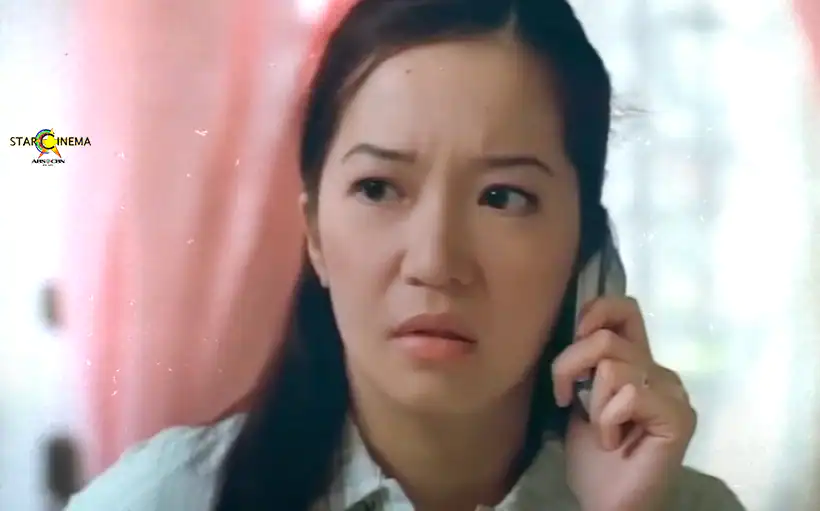
Kris Aquino — the woman the whole country watches, cheers for, and cries with.
There is a peculiar rhythm to Philippine celebrity gossip. Most love stories stay behind closed doors, protected by publicists, managed by networks, and curated for a palatable public image. And then there is Kris Aquino.
The daughter of martyred senator Ninoy Aquino and former President Cory Aquino, the sister of a president, the undisputed Queen of All Media — Kris has spent more than three decades living her love life entirely, unapologetically, and dramatically in public. Her breakups don’t just trend on Twitter. They make front-page broadsheets. They spark Senate-level conversations. They teach the nation new vocabulary — about STDs, annulments, autoimmune disease, and caregiver burnout — that no Filipino celebrity has dared discuss so openly before or since.
From the scandal-laden 2003 split with Joey Marquez to the heartbreaking 2025 Instagram post about Dr. Mike Padlan, Kris Aquino’s heartbreaks have been more than chika. They have been a mirror held up to Philippine society itself — its politics, its conservatism, its parasocial hunger, and its evolving definition of what love is allowed to look like.
The Anatomy of a “Kris Aquino Breakup”
Before diving into the case studies, it helps to understand how a Kris Aquino split unfolds. There’s a pattern so consistent, so recognizable, that Filipino netizens have learned to spot the signs before the official announcement ever comes. Click each phase below to explore.
This three-act structure is practically trademarked. And every single time, it works. Why? Because in a media culture trained on curated personas, Kris’s refusal to be curated feels revolutionary. That’s the paradox at the heart of every Kris Aquino breakup: it is simultaneously very personal and very much for us.
Case Study 1: The Blueprint of Scandals — Joey Marquez (2003)
If there is a Ground Zero for Kris Aquino breakups as national events, it is September 2003. The relationship between the Queen of All Media and Joey Marquez — then the Mayor of Parañaque — had already been controversial from the start. The pairing of a presidential daughter and a local government official felt inherently combustible. What nobody expected was how spectacularly it would combust.
The breaking point allegedly began with an argument over a text message, one that her young son Joshua was present for. What followed wasn’t a quiet separation. It was a seismic public rupture that forced Philippine media to confront what it was willing to cover and how.
When Showbiz Became Hard News
Kris appeared on television with visible bruises on her arms and neck — images that the entertainment press could not, and did not, ignore. She then went to Camp Crame to file charges, accompanied by her mother, former President Corazon “Cory” Aquino. The political weight of that image — the former head of state walking her daughter into a police camp to file a complaint against a sitting mayor — dragged the story from the entertainment section straight to Page One.
But the most jaw-dropping moment came on The Buzz, where Kris did something no Filipino celebrity had done before in quite the same way: she publicly accused Marquez of pointing a gun at her, and — in a revelation that stunned conservative Philippine society — stated that he had transmitted a sexually transmitted disease to her.
Our take: Twenty-plus years later, it’s worth asking whether the exposure was empowering or exploitative — or both. What’s undeniable is that it opened a national conversation about intimate partner violence in the Philippines at a time when few dared name it. That conversation, however imperfect its vessel, mattered.

Case Study 2: The High-Society Annulment — James Yap (2010–2012)
After the chaos of 2003, Kris eventually found something that looked, for a while, like a fairytale. Her July 2005 marriage to James Yap — PBA superstar, tall, charming, and seemingly uncomplicated — felt like a new chapter. She was the famous daughter of Ninoy and Cory, one of the country’s most recognizable faces. He was the basketball hero. Together, they were celebrity royalty.
The unraveling, when it came in 2010, was slower than the Marquez split but no less consuming. Tabloids went into overdrive. The domestic details — legal battles, financial disputes, custody considerations — were dissected in parallel with the political news of the day. This was no longer just showbiz. It was society news, legal news, and human interest story all rolled into one.
The definitive moment came in February 2012, when Boy Abunda — on the late-night newscast Bandila — announced that the marriage had been officially declared null and void, citing a “lack of authority of the solemnizing officer.” It was a technicality that resolved the legal question while leaving the emotional one wide open. And once again, Kris handled it publicly, unapologetically, and on her own terms.
The Yap annulment helped normalize something: that women in the Philippines — even publicly visible, powerful women — could exit marriages that weren’t working, and talk about it without shame. Kris’s willingness to pursue and discuss annulment in a deeply Catholic country was, in its own way, quietly radical. See also our coverage of what happens when Filipino love stories end publicly.
Case Study 3: The Crushed Engagement — Mel Sarmiento (2021–2022)
By 2021, the world — and Kris — had changed significantly. She was in the midst of serious autoimmune treatments, navigating a health crisis in the middle of a global pandemic. Into this chapter came Mel Sarmiento, a former Interior Secretary, and the whirlwind was fast: an engagement announcement in October 2021 that gave her fans a moment of genuine joy.
It lasted months. The split in January 2022 was swift, and Kris — true to form — took to Instagram. But this time, it wasn’t a long monologue. It was something almost more devastating in its brevity: a screenshot. A single text message from Sarmiento, containing the line:
The public reaction was immediate and visceral. The exposure of that actual message — his words, his punctuation, his cold civility — felt like being pulled into her bedroom in real time. It was a masterclass in what critics would call oversharing and what fans would call bravery. The context — that she was undergoing autoimmune treatments during the pandemic while he ended their engagement via text — made it all the more stinging.
Constructive thought: There’s a genuine tension here between the therapeutic release of public disclosure and the ethical weight of sharing private communications. Kris’s approach invites that conversation, even if it doesn’t resolve it.
Case Study 4: The Long-Distance Pause — Mark Leviste (2023)
By 2023, Kris was based in the United States, seeking long-term medical treatment for multiplying autoimmune conditions. Her relationship with Mark Leviste, Batangas Vice Governor, was being stretched across an ocean — and it showed.
The pause she initiated in July 2023 was notable for its maturity and its sadness. She said publicly that Leviste had “many dreams left to fulfill” and a life beyond caring for her. It was the first time a Kris Aquino breakup was framed not as an accusation or an exposé, but as an act of letting go. She wasn’t angry. She was just tired, sick, and gracious in a way that made her audience ache for her.
| Partner | Years | How It Ended | Media Signature |
|---|---|---|---|
| Joey Marquez | ~2001–2003 | Physical altercation; legal charges filed | Live TV tell-all |
| James Yap | 2005–2010 | Legal annulment process | Newscast announcement |
| Mel Sarmiento | 2021–2022 | Breakup text; engagement dissolved | Instagram screenshot |
| Mark Leviste | 2022–2023 | Long-distance pause; illness | Graceful Instagram post |
| Dr. Mike Padlan | 2024–2025 | Partner walked away citing difficulty of caretaking | Viral quote + family drama |
Case Study 5: The Painful Truth — Dr. Mike Padlan (2024–2025)
The most recent chapter may be the most painful. Kris introduced Dr. Mike Padlan, a Makati Medical Center general surgeon, to the public in mid-2024 — a new love story at a time when she was still navigating serious health battles abroad. For her fans, it felt like hope.
By March 2025, it was over. And the way Kris announced it — a carefully worded Instagram post that she called the “cleansed version” — carried a weight that her earlier posts rarely did. She revealed that the doctor had left, saying to her:
(“I left you because you are hard to love, the world around you is too suffocating.”) — Dr. Mike Padlan, as quoted by Kris Aquino
Those words ignited the internet. Then, Dr. Padlan’s son stepped forward to defend his father’s honor on social media, and what was already a national conversation became a generational one — children defending their parents, fans defending Kris, strangers arguing about what partners owe each other when one is chronically ill.
For the first time, a Kris Aquino breakup sparked serious public discourse about caregiver burnout, the emotional limits of love, and what it means to stay with someone who is sick. That’s not tabloid fodder. That’s cultural reckoning.
For more on the complex dynamics behind Philippine celebrity feuds and public statements, see our feature on Dani Barretto vs. Dennis Padilla and the broader pattern of Filipino family disputes played out in public.
Why We Can’t Look Away: The Psychology of the Obsession
At this point it’s worth asking the uncomfortable question: why do we care so much? Philippine showbiz is filled with beautiful, talented, fascinating people whose love lives are equally complicated. So why is Kris Aquino different?
Part of the answer is the parasocial relationship that has built up over decades. Generations of Filipinos watched her grow up — from the daughter of Ninoy and Cory, to the bold talk show host, to the mother navigating illness and heartbreak. She is, in many ways, a common reference point across age groups in a country that doesn’t have many of those.
But there’s something beyond familiarity. In a media landscape trained to deliver polished, PR-managed celebrity content, Kris’s willingness to be genuinely messy creates what feels like radical authenticity. She posts the screenshot. She shows the bruise. She quotes the breakup text verbatim. You can argue about whether that’s wise or ethical, but you cannot argue that it isn’t compelling.
There is also what might be called the “Kris Aquino Effect” — her consistent ability to preempt tabloids, own her narrative, and transform her most vulnerable moments into media events that she controls. Every interviewer who thinks they’ll catch her off guard ends up realizing she already told her own story first, louder, and with more detail than they ever would have printed.
Critics — and there are many — point out that this approach can be damaging: to her, to her children, and to the people she exposes. That’s a fair critique, and one worth sitting with. Transparency without accountability is just exposure. But even the critics can’t deny that she has, time and again, surfaced conversations the country needed to have — about abuse, about illness, about what we owe each other when love ends.
For more on how Filipino public figures navigate love in the spotlight, explore our features on the other side of Kris Aquino, Vilma Santos and Bobot Mortiz, and the iconic Gabby-Sharon-Richard triangle.
Conclusion: The Country’s Most Public Mirror
From hardcopy broadsheets and live television tell-alls in 2003 to viral Instagram screenshots and text message exposés in 2025, Kris Aquino’s heartbreaks reflect the evolution of Philippine media itself. Each platform she has occupied — noontime show, late-night interview, social media — she has used with the same instinct: get there first, tell it raw, and let the country process it with you.
She is not a perfect person, and she has never claimed to be. That, perhaps, is the deepest reason we keep watching. In a country that worships curated heroes and sainted martyrs, Kris Aquino’s stubborn, self-destructive, sometimes brilliant insistence on being human in public is its own kind of defiance.
Love her or hate her, she remains the unparalleled master of her own story — ensuring that, even in her deepest moments of personal devastation, the whole country is watching, listening, and, whether we admit it or not, relating right alongside her.